IFAC World Congress Workshop
Decision and Control Techniques for Power, Energy, and Sustainability


Power, energy, and sustainability are at the core of the ongoing transition towards low-carbon, efficient, and resilient systems. The increasing penetration of renewable energy sources, distributed generation and storage, electrification of transportation, smart buildings, and interconnected multi-energy infrastructures is profoundly reshaping the structure and operation of modern energy systems.
Decision-making and control techniques play a crucial role in enabling effective planning, operation, and management of power and energy systems while ensuring efficiency, reliability, and sustainability. Advanced modeling, optimization, and control approaches are required to cope with large-scale, heterogeneous, and interconnected systems, integrating technical, economic, and environmental objectives across multiple time and spatial scales.
Contributions span a broad range of cutting-edge areas, with emphasis on interdisciplinary approaches, data-driven and learning-based methods, and the connection between theoretical developments and real-world applications.
Advanced control and optimization techniques for modern power grids, including frequency response, voltage control, and grid stability.
Optimization of battery systems, virtual energy storage, and innovative storage solutions for grid flexibility.
Methods for managing high renewable penetration, uncertainty handling, and distributed energy resources coordination.
Decision-support tools for sustainable urban infrastructure, multi-energy systems, and sector coupling.
Machine learning, AI-based control, and learning-based optimization for energy systems.
Distributed control, population games, and game-theoretic approaches for autonomous power grids.
Electric vehicles, hydrogen refueling stations, and sustainable transportation networks.
Environmental objectives, carbon reduction strategies, and resilient energy infrastructures.
The workshop features internationally recognized experts in control, optimization, and decision-making for power and energy systems.
Polytechnic of Milan, Italy
IFAC President-elect
She has been contributing to the activities of the IEEE Control Systems Society (CSS), the International Federation of Automatic Control (IFAC), and the Association for Computing Machinery (ACM) in different roles. She is currently IFAC President-elect. Previously, she was Vice-President for conference activities for IFAC (2020-23) and IEEE CSS (2016 and 2017), and a member of SIGBED Board of Directors (2019-21). She was elected Fellow of the IEEE in 2020 and received the IEEE CSS Distinguished Member award in 2018. In 2017, she was August-Wilhelm Scheer Visiting Professor and Honorary fellow of the TUM Institute for Advanced Studied. She was conferred the title of Visiting Professor in Engineering at the University of Oxford for the triennia 2022-2025 and 2025-2028. Her research interests include stochastic hybrid systems, distributed and data-driven optimization, federated learning in multi-agent systems, and the application of control theory to transportation and energy systems.
The increasing integration of distributed energy resources (DERs) is enabling aggregators to provide flexibility services to the power grid. This requires coordination strategies capable of quantifying the flexibility available from a heterogeneous portfolio of DERs and optimally allocating grid power requests among individual resources while satisfying their operational constraints. This presentation describes an optimization framework that jointly determines the aggregate flexibility limits and the corresponding resource coordination policy, thus avoiding the need for a separate disaggregation step during service operation. The framework also optimizes the baseline operating schedules of individual DERs to maximize the flexibility that can be offered to the grid, while naturally accounting for practical constraints such as resource availability within the service window and network congestion. Finally, the resulting optimization problem is amenable to scalable, privacy-preserving distributed solution methods, making the proposed approach suitable for large-scale DER aggregations.

University of Genoa, Italy
Chair IFAC CC 10
Michela Robba is an Associate Professor of Systems Engineering at the University of Genoa. She received the Degree in Environmental Engineering in 2000, and the PhD in Electronic and Computer Engineering in 2004, from the University of Genova. The research activity is focused on optimisation and control of smart grids, electric vehicles, renewable energy resources, and natural resources management. She is Senior Editor for the journals IEEE Transactions on Automation Science and Engineering and Control Engineering Practice, and Associate Editor for International Journal of Robotics and Research, and IEEE Transactions on Cybernetics. She is Chair of the IFAC Technical Committee 6.3 Power and Energy Systems, and she is Chair of the IFAC Coordinating Committee Power, Energy and Sustainability. She is the author of more than 150 publications in international journals, books and proceedings of international conferences.
To reduce greenhouse gas emissions, energy systems are undergoing a profound transformation driven by the increasing deployment of distributed generation, renewable energy sources, microgrids, and energy communities. However, the widespread integration of intermittent and non-dispatchable renewable sources into distribution networks may create significant challenges for power balancing and system operation. These challenges can be effectively addressed through advanced Energy Management Systems (EMSs) based on simulation, optimization, and control models for multi-vector energy hubs participating in energy markets and providing flexibility services. This talk presents an EMS based on a multilevel architecture for the coordinated management of energy hubs and energy communities characterised by electrical and thermal demands, renewable generation, storage systems, and hydrogen-based technologies. For day-ahead and intraday scheduling, the optimization problems associated with the individual agents are incorporated as constraints into the coordinator’s optimization problem, enabling their coordinated operation while accounting for local requirements. For real-time operation, the different system components are managed through control algorithms based on the reference governor framework. The proposed approaches are assessed using a real-world case study based on the research infrastructure of the Savona Campus.

Baylor University, USA
Vice-Chair IFAC CC 10
Kwang Y. Lee received the B.S. degree in electrical engineering from Seoul National University, Seoul, South Korea, in 1964, the M.S. degree in electrical engineering from North Dakota State University, Fargo, ND, USA, in 1968, and the Ph.D. degree in systems science from Michigan State University, East Lansing, MI, USA, in 1971. He has been working in power plants and power systems control for more than 50 years with Michigan State, Oregon State, University of Houston, the Pennsylvania State University, and Baylor University, where he was a Professor and Chairman with the Department of Electrical and Computer Engineering. His research interests include control, operation, and planning of energy systems, computational intelligence, intelligent control, and their applications to energy and environmental systems, and modeling, simulation, and control of renewable and distributed energy sources. Dr. Lee was elected as a Fellow of IEEE in January 2001 for his contributions to the development and implementation of intelligent system techniques for power plants and power systems control and as a Life Fellow of IEEE since January 2008. Dr. Lee is the past chair of IFAC TC 6.3 (Power and Energy Systems) for two terms and now the Vice-Chair of IFAC CC 6.3 (Power, Energy and Sustainability).
Power and energy systems are undergoing a fundamental transformation driven by large-scale integration of renewable and distributed energy resources, power-electronic interfaces, energy storage, electrification, digitalization, and the growing requirements for sustainability and resilience. These developments are changing not only the structure of energy systems but also the nature of the systems and control problems associated with their planning, operation, and management. This keynote discusses emerging challenges and opportunities for the systems and control community in addressing this transformation. Particular attention is given to distributed and inverter-dominated systems, uncertainty and resilience, multi-timescale coordination, integrated multi-energy infrastructures, and the rapidly expanding role of data-driven methods and artificial intelligence. These developments call for new approaches that combine physical modeling, optimization, control, learning, and decision-making while retaining essential guarantees of stability, robustness, reliability, and safety. Against this background, the presentation highlights the role of IFAC Coordinating Committee 10, Power, Energy and Sustainability, in fostering interdisciplinary research, connecting fundamental advances in systems and control with emerging energy applications, and helping shape a forward-looking research agenda for sustainable, resilient, and intelligent energy systems. In doing so, the keynote provides a broad systems-and-control perspective for the technical topics and discussions that follow throughout the workshop.

Southeast University, China
Chair IFAC TC 10.1
Li Sun, IEEE Senior Member, received the PhD degree from Tsinghua University in 2017. He is currently the Youth Chair Professor in the School of Energy and Environment at Southeast University, Nanjing, China. He was a Visiting Associate Professor in Cornell University since 2019 to 2020. He is mainly engaged in the research of dynamics and control of energy systems with thermal and hydrogen components. He has led over 30 national and enterprise commissioned research projects with more than 20 million CNY, and authored 1 book and more than 120 referred journal papers with more than 5000 citations. He was listed in the Stanford's top 2% top scientists in the world. He is the Chair of IFAC TC 6.3A on Power Systems and Power Electronics and Vice Chair of the Working Group of IEEE Standard P3464 and (guest) editors of renowned journals like Energy, Renewable Energy, and Control Engineering Practice. He was awarded the National-level Youth Talent Fellowship of China in 2023 and Jiangsu Province Outstanding Young Scholars Fund in 2024.
Thermal inertia widely exists in the power systems, such as the thermal power generation in the source side and the heat pump applications in the load side. These thermal inertia is usually caused by the slow dynamics of the temperature and pressure of working fluid such as water/steam, air or refrigerant within a limited volume. This talk will discuss the potential of utilizing the thermal inertia to help smooth the fluctuation of renewable energy and thus improve the flexibility of the power grid. However, the inertia of different thermal components exhibit different time-scale dynamics and requires cautious control design. This talk begins with the dynamic modelling and analysis methods. Several uncertainty compensation based control methods are proposed for different thermal processes, including Economic Model Predictive Control (EMPC) for the energy efficiency optimization of multivariable processes. To demonstrate the efficacy, some field applications of thermal inertia control are introduced in the cases like coal-fired power plant, building energy systems and cascaded heat pump systems for distributed steam generation in industry.

Polytechnic of Porto, Portugal
Chair IFAC TC 10.2
Zita Vale received the Ph.D. degree in electrical and computer engineering from the University of Porto, Porto, Portugal, in 1993. She is currently a Full Professor with the Polytechnic Institute of Porto. Her research interests include artificial intelligence, smart grids, electricity markets, demand response, electric vehicles, and renewable energy sources.
Power and energy systems are under a transition process towards more efficient and sustainable operation. A concrete evidence is the significant increase in the use of renewable energy sources and the electrification of mobility and building climatization. With energy resources becoming increasingly distributed and new active roles seen for consumers and energy communities, distributed decision-making is an important challenge. Artificial Intelligence-based models are needed to face this challenge, ensuring not only adequate approaches for sustainable and efficient energy use but also enabling a human centric approach that enables the fair and efficient participation of all the involved actors. This talk will discuss data driven and knowledge-based approaches that can ensure the required intelligent decision-making in the frame of current and future power and energy systems. Artificial Intelligence traditional paradigms and the boom of the new Large Language Models (LLM) and agentic approaches will be covered and the perspectives for the future will be discussed.
Polytechnic of Bari, Italy
Chair IFAC TC 10.3
Raffaele Carli (IEEE Senior Member) received the Laurea degree (Hons.) in electronic engineering and the Ph.D. degree in electrical and information engineering from Politecnico di Bari, Italy, in 2002 and 2016, respectively. From 2003 to 2004, he was a Reserve Officer with Italian Navy. From 2004 to 2012, he worked as System and Control Engineer and Technical Manager for a space and defense multinational company. He is currently an Associate Professor in Systems and Control Engineering at Politecnico di Bari. He has held national qualifications as a Full Professor since 2023. His research interests include decision and control systems, modeling and optimization of complex systems, with applications to energy and smart infrastructures. He has authored more than 140 international publications and actively serves the scientific community as Senior Editor of IEEE Transactions on Automation Science and Engineering (awarded 2023 and 2024 Best Associate Editor) and Associate Editor of IEEE Transactions on Systems, Man, and Cybernetics. He received the 2024 IEEE Italy Section SMCS Chapter Award for Excellence in Early Career Research.
Vertical farming is transforming agriculture into a large-scale cyber-physical system, where crop growth is no longer constrained by external climate but regulated through tightly controlled environmental and energy variables. In these highly electrified facilities, lighting, HVAC, CO₂ injection, and irrigation systems are strongly coupled with plant physiological dynamics, resulting in multivariable, interconnected systems with significant energy demand. Beyond isolated environmental regulation, vertical farms can be viewed as intelligent nodes within future energy–food ecosystems, capable of interacting with dynamic electricity markets and contributing flexibility to the grid. This talk presents a control framework that integrates crop physiology, energy management, and market signals within a unified receding-horizon architecture, enabling coordinated and scalable operation across multiple layers and environments. .

University of Grenoble, France
Antoneta Bratcu (Senior Member, IEEE) received the M.Sc. degree in electrical engineering from Dunˇ area de Jos University of Galaţi, Galaţi, Romania, in 1996, the Ph.D. degree in control systems and informatics from Université de Franche-Comté de Besançon, Besançon, France, in 2001, and the Habilitation to lead research from Grenoble Alpes University, Grenoble, France, in 2022. She was with the Department of Control Systems and Electrical Engineering, Dunarea de Jos University of Galaţi, from 1996 to 2011. From 2007 to 2009, she was a Postdoctoral Researcher with the Grenoble Electrical Engineering Laboratory, Grenoble. She joined the Grenoble Image Speech Signal and Automatic Control Laboratory, Grenoble, in 2011, where she is currently an Associate Professor. Her current research interests include optimal and robust control applied to energy conversion systems and smart grids.
The ubiquity of electrochemical storage devices in a plethora of applications, including daily life ones, is now an evidence. Whereas they appear in a short term as a suitable solution in line with energy decarbonation, their real environmental impact after the end of lifetime is not negligible. In addition to employing the most effective recycling strategies – like, e.g., second-life applications – ensuring rational exploitation all lifelong is at least of equal importance, in order to preserve reliability and prolong service and lifetime, thus contributing at minimizing the environmental impact. Appropriate operation conditioning of electrochemical storages ineluctably relies upon good knowledge of their internal phenomena, because otherwise, neither control, nor estimation of the internal states – e.g., state of charge (SoC), state of health (SoH), etc. – can be effectively carried out. A major challenge is that these phenomena are governed by parabolic partial differential equations (PDEs), involving multiple-time-scale-varying parameters and which are possibly coupled with nonlinear functions of physically measurable output variables. Indeed, focusing in particular on the estimation task, complexity of accurate mathematical models, but whose parameters are notoriously difficult to measure or estimate, must be traded off against reasonable computational effort of extracting in real time the relevant information. In this talk the attention will be given to SoC estimation for Lithium-ion battery cells, a quite successful and widely-used storage technology. Several ways of designing easy-embeddable SoC estimators are here explored, which promise to be effective in terms of both satisfactory accuracy and low computation complexity, therefore able to ensure smooth and reliable real-time operation. To this end, both electrochemical, PDE-based, models – e.g., the Single Particle Model (SPM) – as well as lumped parameter models – e.g., the Equivalent Circuit Model (ECM) – which macroscopically abstract operation of a battery cell as a voltage source, are used. To further fix ideas, real-world data issued from battery cell cycling in an electric vehicle use case – i.e., under standard driving cycle scenarios – were employed for estimation validation purposes. The obtained results allow some useful insights being formulated and identifying some interesting future directions to explore.

University of Groningen, Netherlands
Michele Cucuzzella received the M.Sc. (2014) and Ph.D. (2018) degrees in Electrical Engineering and Systems and Control from the University of Pavia, Italy. Since 2024, he is an Associate Professor at the University of Groningen. His research focuses on nonlinear control for energy and smart complex systems. He is Associate Editor of the European Journal of Control and recipient of several IEEE and Ph.D. thesis awards.
The transition towards sustainable energy systems calls for distributed control architectures capable of coordinating heterogeneous energy resources while ensuring efficiency, resilience, and operational flexibility. This talk presents recent advances in distributed control and feedback optimization for modern power networks, with a focus on DC microgrids. First, we consider output consensus problems motivated by current and power sharing objectives. We show that a simple distributed output-feedback controller achieves agreement among interconnected nonlinear systems, providing a scalable solution for coordinating distributed energy resources. Experimental results on an islanded DC microgrid demonstrate the effectiveness of the proposed approach. We then briefly introduce a distributed decision-making algorithm by considering DC microgrids in which generation units interact through an energy market. By combining an aggregative game formulation with a passivity-based feedback optimization scheme, we obtain a fully distributed algorithm that guarantees convergence to a feasible operating point corresponding to a generalized Nash equilibrium.

Polytechnic of Bari, Italy
Mariagrazia Dotoli (IEEE Fellow) received the Laurea degree (Hons.) in Electronic Engineering and the Ph.D. degree in Electrical Engineering from Politecnico di Bari, Italy. She is Full Professor of Automatic Control at Politecnico di Bari, where she has also served as Vice-Rector for Research and member of the Academic Senate. She has been a visiting scholar at Université Pierre et Marie Curie (Paris 6) and the Technical University of Denmark, and she has acted as an expert evaluator for the European Commission since the Sixth Framework Programme. Her research interests include modeling, identification, management, control, and diagnosis of discrete-event and networked systems, with applications to manufacturing, logistics, traffic networks, and smart grids. She has authored more than 300 scientific publications, including over 100 journal papers, and has played a leading role in the organization of major international conferences and IFAC/IEEE events. She currently serves as Senior Editor of IEEE Transactions on Automation Science and Engineering and Associate Editor of IEEE Transactions on Systems, Man, and Cybernetics.
Agrivoltaic technology—combining agriculture with photovoltaic energy generation—enables land to produce both food and electricity. However, solar modules can reduce sunlight for crops, affecting yields. This talk introduces a novel optimization-based framework that dynamically balances crop light exposure and power generation. The method reformulates the complex interaction between plants and panels into a convex mixed-integer optimization model with guaranteed approximation accuracy and improved computational scalability Using real-world data from an agrivoltaic site in Southern Italy, we demonstrate how this approach can enhance both agricultural productivity and renewable energy efficiency, paving the way for smarter, data-driven agrivoltaic systems.
University of Genoa, Italy
Giulio Ferro is assistant professor (tenure track) at the university of Genova. He received the B.S. degree in industrial engineering, the M.S. degree in power systems engineering, and the Ph.D. degree in systems engineering from the University of Genoa, Genoa, Italy, in 2014, 2016, and 2020, respectively. He was a Visiting Student with the AAC Laboratory, MIT, Cambridge, MA, USA. He is currently an Assistant Professor with the University of Genoa. He has co-authored more than 60 publications in international journals, books, invited chapters, and conference proceedings. His research interests include optimizing and managing microgrids, distribution networks, and decentralized/distributed optimization.
The transition toward distributed, renewable-based energy systems requires optimization methods that are scalable, privacy-preserving, and suitable for real-time operation. This talk presents decentralized and distributed algorithms for power and energy systems, comparing first- and second-order approaches. First-order methods are discussed in the context of dynamic market mechanisms for combined heat and power microgrids and accelerated coordination algorithms for smart-city energy communities, enabling peer-to-peer energy exchanges among interconnected energy hubs, buildings, microgrids, electric vehicles, and thermal/electric networks. The talk then focuses on second-order approaches based on augmented Lagrangian, ADMM, and Bregman-ADMM schemes, where Newton-type dual updates are used to accelerate convergence. Case studies on the Savona Campus polygeneration microgrid, renewable energy communities, and smart parking lots highlight the potential of these methods for efficient, scalable, and real-time energy management.

University of Vaasa, Finland
Mazaher Karimi is an Associate Professor of Electrical Power Engineering at the School of Technology and Innovations, University of Vaasa, Finland. He is a senior member of the IEEE, and he specializes in substation automation systems and wide-area monitoring, protection, and control schemes for power system networks integrating renewable energy sources. His research actively contributes to the advancement of green electrification, and digitalization with a focus on smart grid applications, distributed generation, power system stability, frequency control, and multi-energy systems. He has extensive experience in academia and collaborating with industries on cutting-edge technologies and projects related to power system resilience and renewable energy integration. He has worked closely with international research teams and industry partners to develop innovative solutions for the evolving energy landscape. His expertise extends to advanced control strategies for modern power grids, with a particular emphasis on enhancing system reliability and efficiency.
With the increasing integration of renewable energy resources and the growing need for resilient low-carbon power systems, developing security-constrained electricity markets and energy management frameworks has become essential for ensuring reliable operation under uncertainty. This challenge is particularly relevant to the power system, where high renewable penetration, electrification, and cross-border market interactions require advanced operational tools capable of maintaining both economic efficiency and system security. This research proposes a stochastic energy management system (EMS) model that explicitly incorporates security constraints and frequency stability requirements. The proposed framework considers N-1 contingencies for generating units and integrates frequency limits to ensure secure and stable system operation. The model is formulated as a stochastic mixed-integer linear programming (MILP) problem that optimizes resource scheduling by maximizing social welfare while accounting for uncertainty, operational constraints, and post-contingency system performance. By embedding security constraints and frequency limits directly into the proposed EMS, the proposed approach provides a comprehensive decision-support framework that balances economic efficiency with operational reliability. Unlike conventional energy management and market-clearing models that often treat economic scheduling, contingency security, and frequency stability separately, the proposed framework captures their interdependence within a unified stochastic optimization structure. This makes the model particularly suitable for future power systems, where increasing variability and reduced system inertia may intensify the need for coordinated operation. The results demonstrate the model’s capability to maximize social welfare, maintain operational constraints, satisfy frequency limits, and ensure secure operation under various contingency scenarios.
Seoul National University of Science and Technology, Korea
Young IL Lee received his B.S., M.S., and Ph.D. degrees in control and instrumentation engineering from Seoul National University (SNU) in 1986, 1988, and 1994, respectively. He was a visiting research fellow at the Dept. of Engineering Science, Oxford University, in 1998. 2-1999. 7 and 2007. 2-2007.7. He worked at Gyeongsang National University from 1994 to 2001 and moved to SeoulTech in 2001. He is currently a Professor at the Department of Electrical and Information Engineering in SeoulTech. He has been a senior member of IEEE since 2015 and has been serving as an editor of the IJCAS and the IJAT since 2017 and 2019, respectively. Currently, he is the director of the Electrical Vehicle Society of the KIEE as well as the Research Center of Electrical and Information Technology of SeoulTech. His areas of scientific interest include MPC for systems with input constraints and model uncertainties, MPC method for DC–DC, AC–DC converter and DC–AC inverter, control of EV chargers, control of AC motors for EV application, and energy management algorithm of microgrids.
Abstract to be announced.

Polytechnic of Bari, Italy
Nicola Mignoni received the the Ph.D. in Automatic Control in March 2025, from Polytechnic of Bari (Italy). He is currently a Research Fellow in Systems and Control Engineering at the same university. His research interests include optimization, game theory, and multi-agent systems, with application to the control of sustainable energy communities.
We study a virtual energy storage service built from the aggregated batteries of parked and inactive electric vehicles. This shared storage resource can provide energy-buffering support to a community of prosumers, but its availability is uncertain because vehicle arrivals and departures are not known in advance. To manage this uncertainty, a parking lot manager acts as an intermediary, offering prosumers a reliable storage service in exchange for a fee. The interaction between the parking lot manager and the prosumers is modeled as a non-cooperative game, since all participants make decisions according to their own objectives. Uncertainty also affects prosumers through fluctuations in energy demand and local renewable generation. We address these features using a distributionally robust game-theoretic framework, which accounts simultaneously for strategic behavior and uncertain problem parameters. We show that the resulting model can be reformulated as a generalized Nash equilibrium problem and analyzed through a variational inequality formulation. In particular, the associated Karush–Kuhn–Tucker operator preserves monotonicity, enabling the use of several convergent distributed solution schemes. Numerical experiments based on real-world data illustrate the feasibility and effectiveness of the proposed approach.
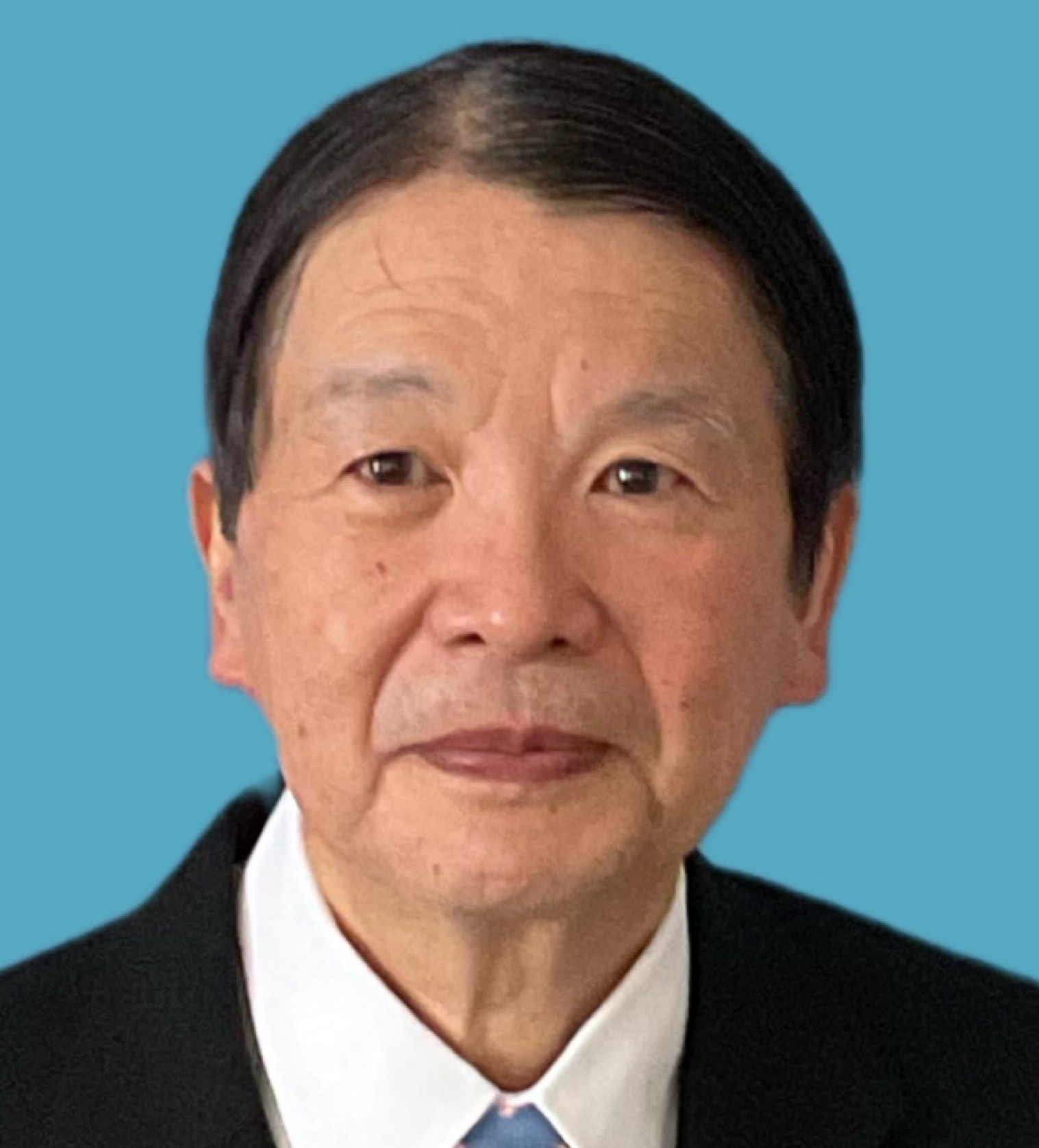
Meiji University, Japan
Hiroyuki Mori obtained his B.Sc., M.Sc., and Ph.D. degrees in Electrical Engineering from Waseda University in Tokyo, Japan, in 1979, 1981, and 1985, respectively. From 1984 to 1985, he served as a Research Associate at Waseda University, and in 1985 he joined the Department of Electrical Engineering at Meiji University (MU), Kawasaki, Japan. He attained the rank of Full Professor in the Department of Electrical Engineering in 1995 and served as a Full Professor in the Department of Network Design at MU from 2013 to 2025. He has been a Visiting Researcher at the MU Research Institute of Smart City Innovation since April 2025. Dr. Mori has also held various visiting appointments at Cornell University in Ithaca, NY, USA, including Visiting Associate Professor from March 1994 to May 1995, Visiting Professor from April 2017 to March 2018, and Visitor from June 2022 to October 2022. He has been actively involved in professional organizations, serving as the Technical Committee Chair of IEEE ANNPS1993 in Yokohama, Japan, and as the IEEE CAS Technical Committee Chair on Power Systems and Power Electronics from June 1993 to May 1994. He served as General Chair for the IEEE PES ISAP2013 in Tokyo, Japan, and for the IFAC (International Federation of Automatic Control) CPES2018 in the same city. From January 2020 to December 2022, he chaired the IEEE PES AMPS ISS (Analytic Methods for Power Systems Committee Intelligent Systems Subcommittee), in addition to being a member of the CIGRE SC/C2 Japan National Committee since 1995. Dr. Mori has received numerous accolades, including the Working Group Recognition Award (2005 and 2022) and the Subcommittee Chair Recognition Award (2023), all from IEEE PES AMPS. He has also received the Distinguished Service Award from IEEJ (2024), the Outstanding Achievement Award (2025), the Annual Meeting Award (2025), the IEEJ Distinguished Paper Award (2026), and the Tamura Memorial Outstanding Achievement Award from the Consortium for Electric Power Technology at Waseda University (2025). His research interests are power system analysis, operation and planning; active distribution automation; and AI applications (Deep Neural Networks, Evolutionary Computation, Fuzzy Logic, Data Mining) for short-term load forecasting, wind/photovoltaic power generation output forecasting, and electricity price forecasting. He is an IEEJ Fellow and Professional, and a member of IEEE and ACM..
This talk presents the development of Quantum Evolutionary Computation for nonlinear power system optimization problems. The proposed method is based on Quantum Predator-Prey Brain Storm Optimization (QPPBSO), which extends Brain Storm Optimization (BSO), a brainstorming-inspired method for generating creative and improved solutions. BSO differs from many other evolutionary approaches by effectively clustering candidate solutions and generating flexible solutions in a probabilistic manner. QPPBSO introduces two strategies to further enhance its performance: (i) a predator-prey strategy that strengthens both intensification and diversification in the search process, and (ii) the use of quantum superposition to encode candidate solutions. The effectiveness of QPPBSO is demonstrated on the complex Unit Commitment problem, a nonlinear mixed-integer optimization problem.

University of Manchester, UK
Alessandra Parisio is Professor of Control of Sustainable Energy Networks in the Department of Electrical and Electronic Engineering at the University of Manchester, where she also serves as Discipline Head of Education. She has led or co-led research projects funded by EPSRC, Innovate UK, the European Commission, and industry, focusing on control and optimisation for energy systems, grid support, and flexibility services. She served on several international conference programme committees and is currently an editor of IEEE Transactions on Control of Network Systems, European Journal of Control, and Applied Energy. Her research interests include model predictive control, distributed and stochastic control, optimisation under uncertainty, and energy management of multi-energy systems.
Distributed energy resources now support services spanning a broad range of time scales—from very fast frequency response to minute‑scale operational coordination of flexible loads and storage. Ensuring reliable delivery under such heterogeneous and evolving conditions requires scalable control and optimisation frameworks capable of handling frequency‑dependent constraints, diverse asset behaviour, and network limitations. Accordingly, distributed control and optimisation methods have emerged for fast frequency response, flexibility coordination, congestion mitigation, and supervisory energy management. This talk focuses on a recent contribution in this landscape: a fixed‑time control framework for Frequency‑Varying Optimization. Fast Frequency Response services increasingly rely on large aggregations of distributed energy resources that must satisfy delivery requirements depending on the instantaneous grid frequency, while reacting within 1–10 seconds. By formulating a frequency‑parametrised, time‑varying optimisation problem and analysing how the optimal solution evolves, we derive feedback–feedforward projected algorithms that guarantee convergence within a prescribed fixed time, under feasibility constraints. A distributed architecture allows the method to scale to a large number of assets while preserving privacy. The resulting controllers achieve sub‑second convergence on IEEE benchmark systems and are compatible with the delivery requirements of Dynamic Containment, Dynamic Moderation, and Dynamic Regulation services.

Universidad de los Andes, Colombia
Nicanor Quijano (IEEE Senior Member) received his B.S. degree in Electronics Engineering from Pontificia Universidad Javeriana (PUJ), Bogotá, Colombia, in 1999. He received the M.S. and PhD degrees in Electrical and Computer Engineering from The Ohio State University, in 2002 and 2006, respectively. In 2007, he joined the Electrical and Electronics Engineering Department, Universidad de los Andes (UAndes), Bogotá, Colombia where he is currently a Full Professor and the director of the research group in control and automation systems (GIAP, UAndes). He has been a member of the Board of Governors of the IEEE Control Systems Society (CSS) for the 2014 period, an associate editor for the IEEE Transactions on Control Systems Technology (2018-2023), the Journal of Modern Power Systems and Clean Energy (2016-2018), and Energy Systems (2018-2021), and he was the chair of the IEEE CSS, Colombia for the 2011-2013 period. He has published more than 100 scientific papers (journal papers, international conference papers, book chapters), he has co-advised the best European PhD thesis in the control systems area in 2017 and 2025, and he is the co-author of the best paper of the ISA Transactions, 2018. In 2021, he obtained the Experienced Research Award from the School of Engineering, UAndes, and in 2025 he won the Alain Gauthier Award from the IEEE Control Systems Society Colombia. Currently his research interests include hierarchical and distributed network optimization methods for control using learning, bio-inspired, and game-theoretical techniques for dynamic resource allocation problems, especially those in energy, water, agriculture, and transportation.
Cities concentrate the primary challenges of climate change mitigation and adaptation, and these pressures are particularly acute in rapidly urbanizing, under-resourced regions. Bogotá, Colombia, illustrates the point starkly: the severe 2024 El Niño depleted reservoirs and forced water rationing across the city and surrounding areas, while the subsequent La Niña brought concentrated heavy rains that overwhelmed the city's aging urban drainage systems (UDS), causing frequent flooding. A new El Niño phenomenon is now expected to affect Colombia again starting in the second half of 2026, with official forecasts from IDEAM and NOAA pointing to conditions that are already present and likely to strengthen into a potentially very strong event persisting through early 2027. These recurring, compounding climate events underscore the urgency of integrated water management and sustainable urban planning to build lasting resilience. This talk presents two complementary contributions developed around Colombian case studies. First, we describe an integrated low-carbon-cities methodology, developed under a UK-PACT-funded project, that structures sustainability planning across six interacting sectors (energy, water, waste, transport, buildings, and urban ecology) using a hierarchy of measurable indicators and a fuzzy comprehensive assessment that turns heterogeneous, partly linguistic data into interpretable priorities for planners. Applied to Ciudad Verde, one of Colombia's largest social housing developments, the methodology identifies priority sectors for intervention and couples sectoral models into a single decision-support tool. Second, we show how population games and Evolutionary Game Theory (EGT) provide a scalable framework for the decentralized, real-time control of urban infrastructure, focusing on drainage networks. By partitioning a network into convergent and divergent topologies and designing replicator-dynamics-based local controllers with barrier terms enforcing physical constraints, wastewater volumes are balanced across collectors, mitigating overflooding during storm events without centralized computation or full network communication. Simulation results on a Bogotá catchment illustrate the approach. EGT's demonstrated effectiveness in applications such as electric vehicle charging and microgrid synchronization points to natural extensions of this framework toward distributed energy resource coordination and the water, energy, and food nexus, problems central to this workshop's theme.

Monash University, Australia
Elizabeth Ratnam earned her BEng (Hons I) degree in Electrical Engineering in 2006 and a PhD in Electrical Engineering in 2016, both from the University of Newcastle, Australia. She further honed her expertise through postdoctoral research positions at the University of California, San Diego, and the University of California, Berkeley, within the California Institute for Energy and Environment (CIEE). From 2001 to 2012, Dr. Ratnam held key positions at Ausgrid, one of Australia’s largest electricity distribution networks. Her exceptional contributions to the field earned her the Future Engineering Research Leader (FERL) Fellowship at The Australian National University (ANU), where she served as a Senior Lecturer and Sub-Dean for Educational Programs at the College of Engineering & Computer Science. As of 2024, Dr. Ratnam continues to advance the frontiers of power systems research as an Associate Professor at Monash University. A Senior Member of IEEE and a Fellow of Engineers Australia, Dr. Ratnam’s research is centered on pioneering new paradigms for operating power systems, with a strong focus on developing a resilient, carbon-neutral power grid.
Australia must continue to transition its electric power grid to renewable energy, such as wind and solar, backed by battery storage. However, integrating renewable energy technologies into the power grid and supporting the substantial increase in electricity required to electrify everything (e.g., electric cars) is a significant challenge, particularly while ensuring the power system remains affordable, reliable, and safe. In this talk, I will introduce a new control framework based on negative imaginary systems theory that enables the electric grid to operate more efficiently, reducing the need for a massive expansion of electricity grid infrastructure. This control framework will use battery storage for robust control action and advanced sensors for precision measurement to avoid the massive cost associated with building more transmission corridors and other grid expansions. The aim is to meet the challenge of transforming power systems for a net-zero emissions future in a cost-effective way while maintaining the stable and reliable power grid that we have known for over a century.

Delft University of Technology, Netherlands
Estefanía Tapia received the Ph.D. degree in electrical engineering from the National University of San Juan, Argentina, in 2023. She joined as a postdoctoral research associate at Delft University of Technology, the Netherlands in 2025. Her research interests include the data-driven analysis of power system stability phenomena in HVDC–HVAC systems, artificial intelligence–based methodologies for stability assessment, monitoring, and early identification of critical events, as well as the development of adaptive and automated control actions to enhance system robustness.
Multi-energy systems are emerging as key power system architectures whose operation is largely enabled by power electronic converters. However, the complex dynamic interactions among their interconnected components introduce new stability challenges, with subsynchronous oscillations (SSOs) becoming an increasing concern. This talk discusses the potential of data-driven methods and artificial intelligence algorithms for the early identification of SSOs across a wide range of operating conditions and contingency scenarios. Time-domain simulations, combined with advanced signal-processing techniques, can be used to construct representative datasets and characterize oscillatory events according to their frequency and damping properties. These datasets can subsequently support the development and training of artificial intelligence models capable of recognizing critical SSO patterns from short observation windows of multivariate time-series measurements. The discussion highlights how data-driven approaches can complement conventional stability assessment tools while improving the speed and reliability of SSO identification.
For inquiries about the workshop, please contact us.
This workshop welcomes researchers and practitioners from diverse backgrounds within the IFAC community and beyond.
Basic background in control systems, optimization, or decision-making methods. General interest in applications to power, energy, and sustainability-related systems. No highly specialized prerequisite knowledge required.
The workshop takes place on Sunday August 23, 2026. All times are local.